Coral Honeysuckle 'Honey Coral'
Lonicera Sempervirens 'Honey Coral' | Coral Honeysuckle 'Honey Coral' | Trumpet Honeysuckle 'Honey Coral' | Lonicera sempervirens 'Honey Coral'
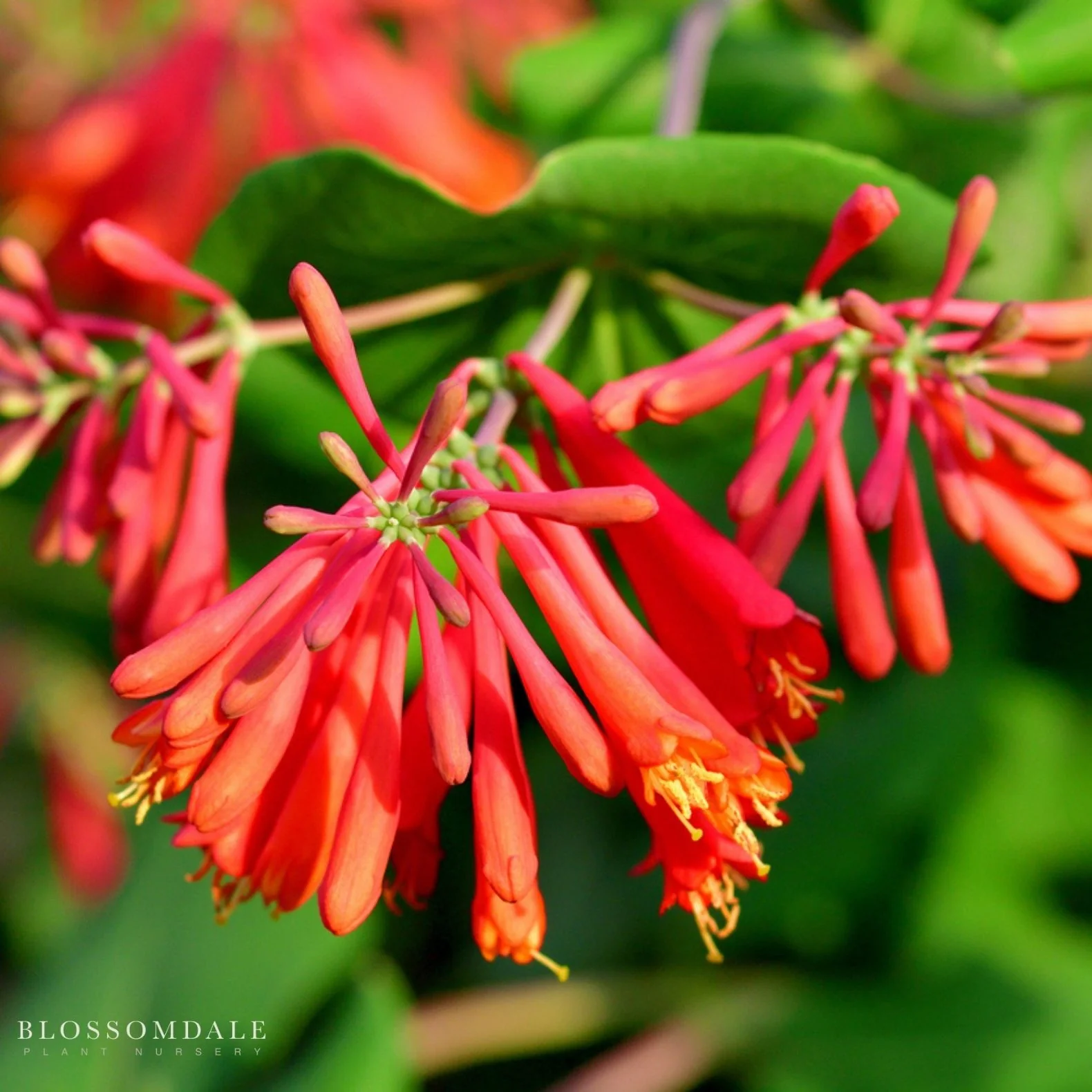
Lonicera Sempervirens 'Honey Coral' is a vigorous, semi-evergreen twining vine celebrated for its prolific coral-pink trumpet-shaped flowers that bloom repeatedly from spring through fall. This hummingbird magnet adds vibrant color and vertical interest to trellises, arbors, fences, or even as a sprawling groundcover in native and pollinator gardens. Selected for its rich honey-coral blooms and disease resistance, it offers low-maintenance beauty without the invasiveness of exotic honeysuckles.
Growing Lonicera Sempervirens 'Honey Coral'
Light: Full sun to partial shade; blooms best in sun.
Soil: Well-drained loam, clay, or sand; neutral to acidic pH.
Water: Moderate; drought-tolerant once established, keep moist in dry spells.
Maintenance: Prune lightly in late winter to shape; no heavy pruning needed.
Wildlife: Attracts hummingbirds, butterflies, bees, and songbirds eat the red berries.
Hardiness: USDA zones 4–9; evergreen in mild winters, deciduous northward.
Shipping Info
Lonicera Sempervirens 'Honey Coral' are shipped as young plant starts in 4" nursery pots. The plants can be re-potted after they recover from shipping stress approximately 1 to 2 weeks.
Lonicera Sempervirens 'Honey Coral' | Coral Honeysuckle 'Honey Coral' | Trumpet Honeysuckle 'Honey Coral' | Lonicera sempervirens 'Honey Coral'
Lonicera Sempervirens 'Honey Coral' is a vigorous, semi-evergreen twining vine celebrated for its prolific coral-pink trumpet-shaped flowers that bloom repeatedly from spring through fall. This hummingbird magnet adds vibrant color and vertical interest to trellises, arbors, fences, or even as a sprawling groundcover in native and pollinator gardens. Selected for its rich honey-coral blooms and disease resistance, it offers low-maintenance beauty without the invasiveness of exotic honeysuckles.
Growing Lonicera Sempervirens 'Honey Coral'
Light: Full sun to partial shade; blooms best in sun.
Soil: Well-drained loam, clay, or sand; neutral to acidic pH.
Water: Moderate; drought-tolerant once established, keep moist in dry spells.
Maintenance: Prune lightly in late winter to shape; no heavy pruning needed.
Wildlife: Attracts hummingbirds, butterflies, bees, and songbirds eat the red berries.
Hardiness: USDA zones 4–9; evergreen in mild winters, deciduous northward.
Shipping Info
Lonicera Sempervirens 'Honey Coral' are shipped as young plant starts in 4" nursery pots. The plants can be re-potted after they recover from shipping stress approximately 1 to 2 weeks.
Description
Lonicera Sempervirens 'Honey Coral' | Coral Honeysuckle 'Honey Coral' | Trumpet Honeysuckle 'Honey Coral' | Lonicera sempervirens 'Honey Coral'
Lonicera Sempervirens 'Honey Coral' is a vigorous, semi-evergreen twining vine celebrated for its prolific coral-pink trumpet-shaped flowers that bloom repeatedly from spring through fall. This hummingbird magnet adds vibrant color and vertical interest to trellises, arbors, fences, or even as a sprawling groundcover in native and pollinator gardens. Selected for its rich honey-coral blooms and disease resistance, it offers low-maintenance beauty without the invasiveness of exotic honeysuckles.
Growing Lonicera Sempervirens 'Honey Coral'
Light: Full sun to partial shade; blooms best in sun.
Soil: Well-drained loam, clay, or sand; neutral to acidic pH.
Water: Moderate; drought-tolerant once established, keep moist in dry spells.
Maintenance: Prune lightly in late winter to shape; no heavy pruning needed.
Wildlife: Attracts hummingbirds, butterflies, bees, and songbirds eat the red berries.
Hardiness: USDA zones 4–9; evergreen in mild winters, deciduous northward.
Shipping Info
Lonicera Sempervirens 'Honey Coral' are shipped as young plant starts in 4" nursery pots. The plants can be re-potted after they recover from shipping stress approximately 1 to 2 weeks.